“It’s not flat!” “It’s a lie!” “It is not about ‘geometric’!” “I know how to read the elevation on Google, I know topographical maps!” “There is no other interpretation of flat!!”

Continue reading “Naours, France: Biking and Touring the Underground”
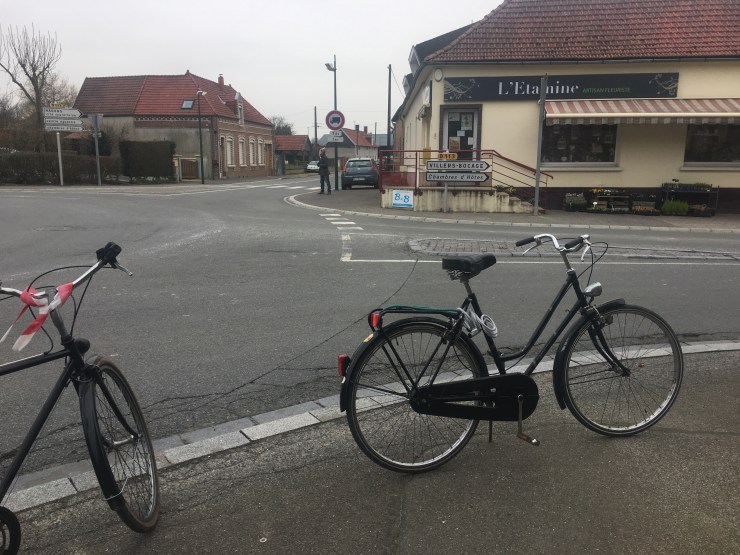
“It’s not flat!” “It’s a lie!” “It is not about ‘geometric’!” “I know how to read the elevation on Google, I know topographical maps!” “There is no other interpretation of flat!!”
Continue reading “Naours, France: Biking and Touring the Underground”
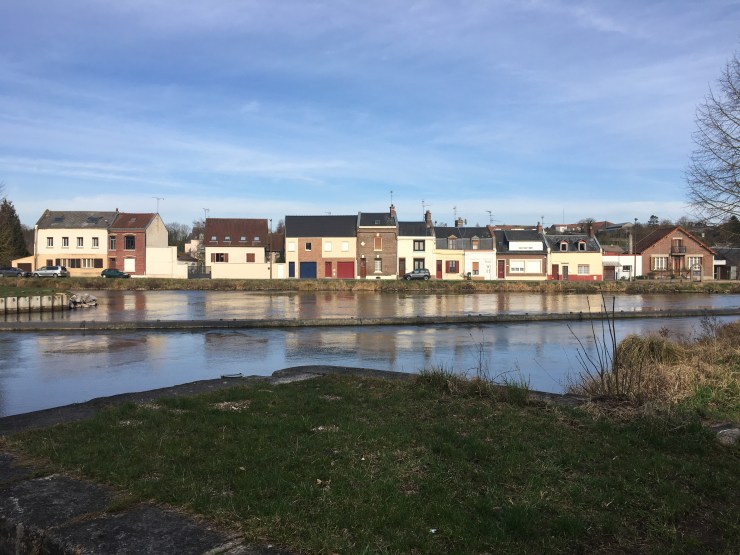
Amiens is friend to no weatherman: her cloud breaks and spots of drizzle make for predictions no more successful than your telephone soothsayer’s. When visiting Limoges in late February, my friend told me about his mother’s gaffe when she moved there from Amiens. She would go everywhere with an umbrella wedged under her arm. Her first friends in the neighborhood gently teased: why, they asked, would she lug that thing with her on sunny days? It was a holdover habit from her youth, she admitted. One day in Amiens might have announced with a crisp morning sun, transitioned quickly to drizzle, breathed through a streak in the clouds and, finally, simpered into foggy evening.
Continue reading “Ambling in Amiens, The “Venice” of France”
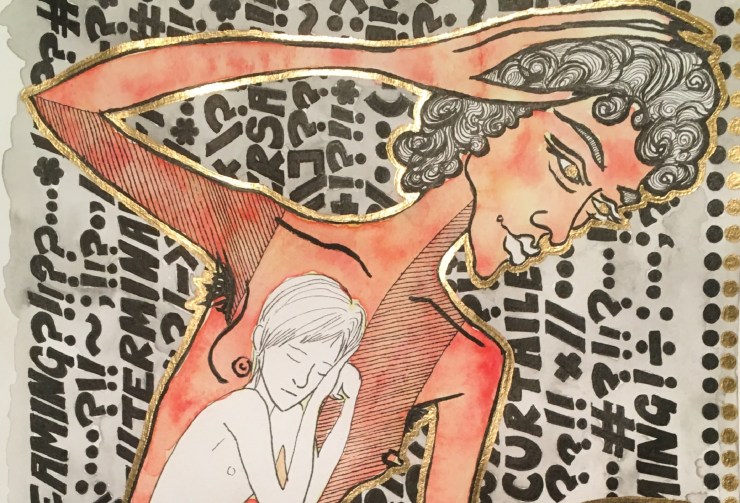
Every country has its own complex history, culinary tradition, spiritual expression (or three); its psycho-social reaction to trauma, methods to educate, and medical treatments; dances, songs, artistic oeuvre; political organ, scientific tradition, brick-a-brack house, street food, topiary, dog breed, orchid… This is all just people, us, trying to make sense of what we’ve got.
From my respective box, I offer a solution to my aunt Ellie’s question about ethically depicting another culture to an American audience: characterize the “odd” habits of the “others” as the commonplace. Because that’s precisely what they are – a commonplace you just don’t understand, yet.

Comparing two cultures is a privilege – if not an essential practice – that can catalyze greater understanding of the self, a native society and how societies relate to one another. My time in Moldova has helped me see beyond what I had been socialized to accept as “normal.”
People have to make sense of what they observe, and the way the human mind accomplishes this most efficiently is to draw upon previous experience. We compare and contrast, often intuitively. It’s a box – we can become trapped in it – but it’s on wheels.
I recently wrote a research proposal for a competition that would allow me to extend my stay in Comrat. The work would involve both a culminating paper and an ongoing storytelling project. Both would explore the nuances of belief, religion, magic and superstition in Gagauzia. I knew my tales would be meant mainly for an American audience, and proposed that Americans could learn a thing or two about truth and fact when reading my expositions.
I sent the thing off for feedback, and my step-aunt Ellie provided a galaxy of criticism! She recommended that I expand on the topic of how I would ethically approach cultural reporting. More importantly, though, she pushed me to consider how to treat people seriously – in writing and in person.

This past Sunday, I rose early for autumn’s first chill dawn. I dressed and waited for my partner Anna’s call – she was hitchhiking in from her village. She rang from the cemetery. Though we had planned to meet at my place, her ride had dropped her early and unceremoniously. The walk to my director Olga’s house would be faster if Anna didn’t have to meet me.
I sighed, and trudged alone the 20 minutes to Olga’s home, where I joined the ladies and Olga’s parents for breakfast. We waited longer than we had planned for two neighbors, but we needed them – it’s wine season in Moldova!
 Sundry Travels